




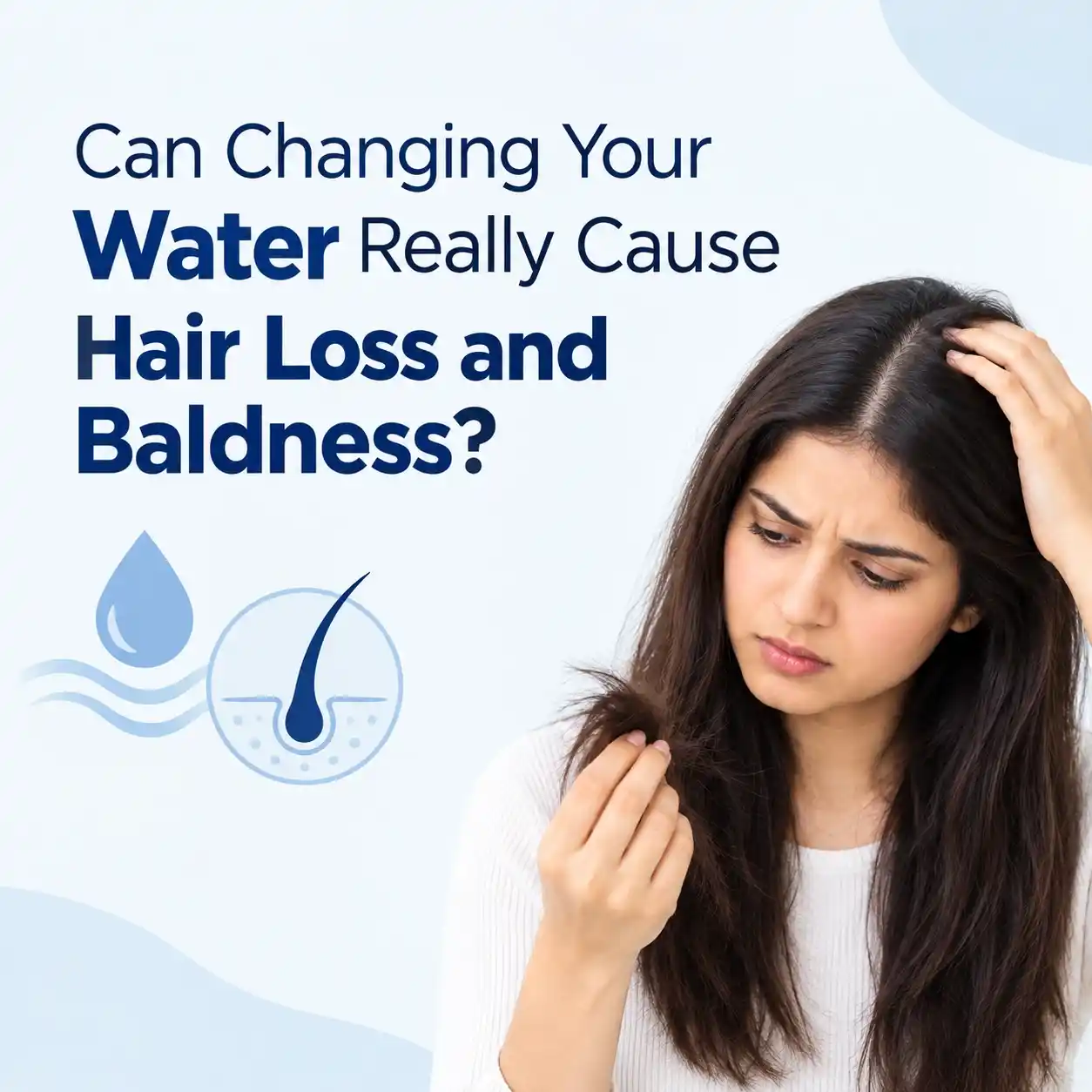
Hair fall can be frustrating, especially when you notice more strands on your pillow, in the shower, or while combing your hair. Sometimes, these changes begin after moving to a new city, traveling, or switching to a different water source. This often raises an important question: Can changing your water really cause hair loss and baldness?
The answer is that changing your water may affect your hair and scalp health, particularly if the new water is hard or contains high levels of certain minerals. However, changing water alone does not usually cause permanent baldness. Hair loss can have several underlying causes, including genetics, hormonal changes, nutritional deficiencies, medical conditions, and scalp disorders.
Understanding how water quality affects your hair can help you make better hair care decisions and identify when professional guidance may be necessary.
How Does Water Quality Affect Hair Health?
Water is an essential part of your hair care routine. You use it to rinse your hair, remove shampoo, and maintain scalp hygiene. Although water does not directly control hair growth, its mineral content and quality can influence the condition of your hair and scalp.
Water quality varies between cities, neighborhoods, and households. Some areas receive soft water, while others have hard water containing higher concentrations of minerals such as calcium and magnesium.
When you change your water source, your hair may feel different. It might become rough, dry, tangled, or difficult to manage. These changes can be especially noticeable if your previous water source had a different mineral composition.
However, changes in hair texture do not necessarily mean that your hair follicles are being damaged or that you will develop baldness.
What Is Hard Water, and How Can It Affect Your Hair?
Hard water contains relatively high levels of dissolved minerals, particularly calcium and magnesium. It is common in many regions and may affect how shampoo and other hair care products work.
Here are some ways hard water may influence your hair:
1. Mineral deposits on the hair
Minerals can accumulate on hair strands, especially with repeated washing. This buildup may make hair feel rough, dull, stiff, or less manageable.
2. Increased dryness and tangling
When hair becomes rough and difficult to detangle, brushing or combing may cause more breakage. This can make your hair appear thinner over time, even when the hair follicles are still functioning normally.
3. Scalp discomfort
Some people experience dryness, irritation, or itching after using a different water source. However, these symptoms can also result from shampoo ingredients, existing skin conditions, or other environmental factors.
4. Changes in shampoo performance
Hard water can interfere with the lathering and rinsing of certain cleansing products. This may leave hair feeling coated or less clean, depending on the products and water conditions.
It is important to understand that scientific evidence linking hard water directly to significant hair loss or permanent baldness remains limited. Hard water may affect hair quality, but it should not automatically be considered the cause of excessive hair fall.
Can Changing Water Cause Hair Fall?
Changing water may contribute to hair-related concerns, but the relationship is not always straightforward.
For example, you might move from one city to another and notice increased hair shedding within a few weeks. Although the water supply may have changed, other factors could also be responsible.
These may include:
-
Changes in diet or eating habits.
-
Stress associated with moving or traveling.
-
Differences in climate, humidity, and temperature.
-
Changes in shampoo, conditioner, or hair styling routines.
-
Exposure to water with different mineral levels.
-
An underlying scalp condition that has become more noticeable.
Hair shedding can also occur after physical illness, significant stress, or nutritional deficiencies. In some cases, the increased shedding begins several weeks or months after the triggering event.
Therefore, it is important to evaluate the timing, severity, and pattern of hair loss instead of assuming that a change in water is the only explanation.
Does Hard Water Cause Permanent Baldness?
Hard water is not an established direct cause of permanent baldness.
Permanent or progressive hair loss is more commonly associated with conditions such as androgenetic alopecia, also known as male or female pattern hair loss. Other causes include certain autoimmune conditions, inflammatory scalp disorders, and some forms of scarring alopecia.
Water-related hair problems may make existing hair look thinner by contributing to dryness and breakage. However, hair shaft breakage is different from hair shedding caused by changes in the hair growth cycle.
For example, if your hair strands are breaking midway, you may notice shorter pieces of hair and uneven lengths. If you are experiencing shedding from the roots, you may notice more full-length hairs falling out.
Recognizing this difference can help you understand whether you need to adjust your hair care routine or seek an assessment from a qualified hair and scalp specialist.
What About Chlorinated Water?
Municipal water supplies may contain chlorine or other disinfectants used to control harmful microorganisms. Exposure during routine washing is not generally considered a common cause of permanent hair loss.
Nevertheless, some people may experience dryness or irritation depending on their individual sensitivity, the water conditions, and the products they use.
If your scalp feels uncomfortable after washing, consider using a gentle shampoo, rinsing thoroughly, and avoiding excessive heat styling. If irritation continues, a healthcare professional can help identify the underlying cause.
You should also avoid assuming that every change in hair texture is caused by chlorine or other chemicals without evaluating other possibilities.
How Can You Protect Your Hair When Changing Water?
If you have recently changed your water source and noticed changes in your hair, the following steps may help improve hair and scalp care.
1. Use a gentle shampoo
Choose a shampoo appropriate for your scalp type. If your scalp is oily, dry, sensitive, or prone to dandruff, select products accordingly.
2. Consider a clarifying shampoo when appropriate
If mineral or product buildup is suspected, a suitable clarifying shampoo may help remove residue. Avoid excessive use, particularly if your hair is dry, chemically treated, or your scalp is sensitive.
3. Use conditioner regularly
Apply conditioner mainly to the lengths and ends of your hair to improve smoothness, reduce tangling, and minimize breakage.
4. Avoid aggressive brushing
Wet hair can be more vulnerable to mechanical damage. Detangle gently with a wide-tooth comb, starting at the ends and gradually moving upward.
5. Check your water quality
If you suspect hard water, you can have your water tested or consult your local water supplier for information about mineral levels. A shower filter may help with certain contaminants, depending on its design, but not all filters effectively remove the minerals responsible for water hardness.
6. Maintain a balanced diet
Adequate protein, iron, zinc, and other essential nutrients support normal hair growth. Supplements should not be taken indiscriminately; deficiencies are best evaluated with appropriate medical advice.
7. Seek professional guidance for persistent hair fall
If shedding continues, your hair density decreases, or bald patches develop, consult a dermatologist or qualified hair and scalp specialist. Early evaluation can help identify the cause and guide appropriate treatment.
When Should You Consult a Hair Specialist?
Occasional hair shedding is normal. However, certain symptoms deserve professional attention, particularly when they persist or worsen.
Consider seeking an assessment if you notice:
-
Sudden or excessive hair shedding.
-
Round or patchy areas of hair loss.
-
A widening part or a receding hairline.
-
Persistent scalp itching, redness, scaling, or inflammation.
-
Hair loss accompanied by pain or tenderness.
-
Progressive thinning despite changes in your hair care routine.
Conditions such as alopecia areata, scalp psoriasis dandruff-related inflammation, and pattern hair loss require different approaches. Treating the underlying condition is more effective than focusing only on water quality.
A specialist may review your medical history, examine your scalp, and recommend tests when appropriate to determine the cause of your symptoms.
Conclusion
Changing your water can affect how your hair feels, particularly when the new source contains more minerals or differs in other ways from your previous water supply. Hard water may contribute to roughness, dryness, mineral buildup, and hair breakage in some circumstances.
However, changing water does not automatically cause hair loss and hard water is not an established direct cause of permanent baldness. Genetics, hormonal factors, nutritional deficiencies, stress, and scalp disorders may play a more significant role in persistent hair loss.
If you notice excessive shedding after moving to a new location or changing your water source, pay attention to your scalp health, hair care routine, and any other changes in your lifestyle. If the problem continues, professional evaluation can help you identify the actual cause and choose an appropriate treatment plan.
Healthy hair begins with understanding your scalp and addressing the right problem rather than relying on assumptions.
FAQs
1. Can changing water cause hair loss?
Changing water may affect hair texture and scalp comfort, particularly if the new water is hard. However, water changes alone are not an established cause of permanent hair loss. Other factors, including genetics, stress, nutritional deficiencies, and scalp conditions, should also be considered.
2. Does hard water cause baldness?
Hard water is not a proven direct cause of permanent baldness. It may contribute to mineral buildup, dryness, tangling, and hair breakage. Persistent thinning or bald patches may indicate an underlying condition that needs professional evaluation.
3. Can hair grow back after switching to a different water source?
If the problem is primarily hair dryness or breakage, improving your hair care routine and reducing buildup may help your hair look healthier as it grows. If you are experiencing hair loss from the roots, regrowth depends on the underlying cause rather than the water change alone.
4. Is filtered water better for washing hair?
Filtered water may improve certain water-quality issues, depending on the filter. However, not all filters remove calcium and magnesium, the minerals responsible for hard water. If hardness is a concern, check the filter specifications and consider testing your water before investing in a treatment system.
5. When should I consult a hair specialist for hair fall?
Consult a qualified hair and scalp specialist if you experience persistent excessive shedding, progressive thinning, bald patches, or scalp itching and inflammation. An appropriate evaluation can help distinguish water-related hair damage from conditions such as alopecia areata, pattern hair loss, or other scalp disorders.