




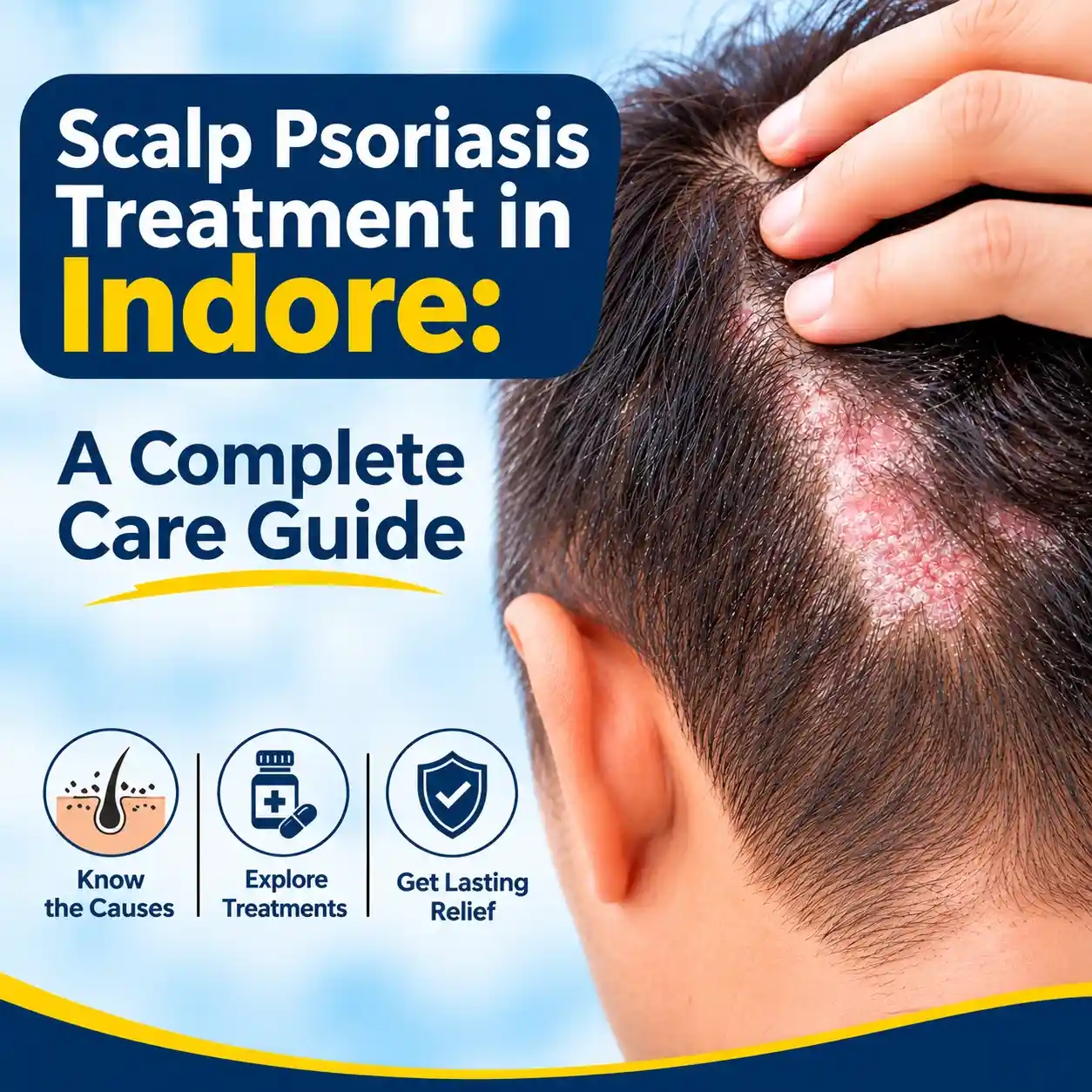
Scalp psoriasis is a chronic skin condition that can cause itching, redness, irritation, and thick, scaly patches on the scalp. It may affect a small area or spread across the entire scalp, sometimes extending to the forehead, behind the ears, and the back of the neck. Although it is not contagious, scalp psoriasis can cause considerable discomfort and affect a person’s confidence and daily routine.
If you are experiencing persistent scalp scaling, itching, or inflammation, understanding the condition and seeking appropriate care can help you manage its symptoms. With professional guidance and a suitable treatment plan, many people can achieve better scalp comfort and control flare-ups.
For individuals looking for scalp psoriasis treatment in Indore, Dr. Meet’s Clinic offers specialized trichology and scalp care guidance focused on understanding individual scalp concerns.
What Is Scalp Psoriasis?
Scalp psoriasis is a chronic inflammatory skin condition that develops when the immune system speeds up the growth cycle of skin cells. Normally, skin cells renew gradually. However, with psoriasis, this process becomes much faster, causing skin cells to accumulate on the surface.
This buildup forms thick, raised patches covered with silvery or whitish scales. The condition can range from mild flaking to more severe inflammation and extensive scaling.
Scalp psoriasis can occur at any age and may come and go over time. Some people experience occasional flare-ups, while others deal with recurring symptoms that require ongoing management.
Common Symptoms of Scalp Psoriasis
Recognizing the symptoms early can help you seek appropriate care and avoid unnecessary scalp irritation.
Common signs include:
- Thick, scaly patches: Raised areas covered with white or silvery scales.
- Persistent itching: The scalp may feel itchy, irritated, or uncomfortable.
- Redness and inflammation: Affected areas may appear red or inflamed.
- Dryness and flaking: Skin may become excessively dry and shed visible flakes.
- Cracking or bleeding: Scratching or removing thick scales can damage the skin.
- Temporary hair shedding: Inflammation and repeated scratching may contribute to temporary hair loss.
The symptoms may vary depending on the severity of the condition. Not every person experiences all these signs.
What Causes Scalp Psoriasis?
The exact cause of scalp psoriasis is not fully understood. However, it is associated with an overactive immune response and a genetic tendency to develop the condition.
Several factors may trigger or worsen flare-ups.
1. Genetic Predisposition
A family history of psoriasis can increase the likelihood of developing the condition. However, having a family member with psoriasis does not mean you will necessarily develop it.
2. Stress
Physical or emotional stress may trigger psoriasis flare-ups or make existing symptoms worse. Managing stress can be a helpful part of overall care.
3. Infections
Certain infections, particularly streptococcal throat infections, may trigger psoriasis in susceptible individuals.
4. Skin Injuries
Cuts, scratches, sunburn, or repeated irritation can sometimes lead to psoriasis patches developing in affected areas. This is known as the Koebner phenomenon.
5. Weather Changes
Cold and dry weather may worsen scalp dryness and discomfort in some individuals. Changes in environmental conditions can also influence symptom severity.
6. Certain Medications
Some medications may trigger or aggravate psoriasis. Never stop prescribed medication without discussing it with your healthcare professional.
How Is Scalp Psoriasis Diagnosed?
An accurate diagnosis is essential because scalp psoriasis can resemble other scalp conditions, particularly dandruff and seborrheic dermatitis.
A healthcare professional may evaluate:
- The appearance and location of scalp patches
- The thickness and pattern of scaling
- The presence of redness or inflammation
- Symptoms affecting other areas of the body
- Personal and family medical history
In most cases, a physical examination is sufficient. Occasionally, a skin biopsy may be recommended when the diagnosis is uncertain.
Getting the correct diagnosis helps determine the most appropriate treatment approach.
Scalp Psoriasis Treatment in Indore: Available Options
There is currently no permanent cure for psoriasis, but several treatments can help control inflammation, reduce scaling, and manage discomfort. The right approach depends on the severity of the condition, affected areas, medical history, and individual response.
1. Medicated Topical Treatments
Topical medications are commonly used for mild to moderate scalp psoriasis. Depending on the diagnosis, a healthcare professional may recommend:
- Corticosteroid solutions, foams, or lotions to reduce inflammation
- Vitamin D-based topical treatments to slow excessive skin cell growth
- Medicated preparations to soften and remove thick scales
- Other prescription scalp treatments when appropriate
These treatments should be used according to professional instructions, as prolonged or inappropriate use may cause side effects.
2. Medicated Shampoos
Specialized shampoos may help manage scaling and remove excess buildup. Some formulations contain ingredients such as salicylic acid or coal tar.
The appropriate shampoo depends on the scalp condition and its severity. Regular cosmetic shampoos may not be sufficient for managing active scalp psoriasis.
3. Phototherapy
Phototherapy uses controlled ultraviolet light to help reduce psoriasis symptoms. It may be considered for certain patients, particularly when the condition is difficult to manage with topical treatments.
Treatment should always be supervised by a qualified medical professional.
4. Oral or Injectable Medications
For moderate to severe psoriasis, a dermatologist may recommend systemic medications or biologic therapies. These treatments work by targeting specific immune system pathways involved in inflammation.
They require medical evaluation and monitoring to assess suitability, effectiveness, and potential side effects.
5. Individualized Scalp Care
Alongside medical treatment, maintaining a gentle scalp care routine can help reduce irritation. Avoid aggressive scratching, harsh chemical products, and forceful removal of scales.
Your treatment plan should focus on controlling inflammation rather than simply removing visible flakes.
Scalp Psoriasis vs. Dandruff: Understanding the Difference
Scalp psoriasis is sometimes confused with dandruff because both conditions can cause flaking and itching. However, they are different conditions and may require different treatments.
| Feature | Scalp Psoriasis | Dandruff |
|---|---|---|
| Appearance | Thick, defined patches | Fine, loose flakes |
| Scaling | Often silvery or white | Usually white or yellowish |
| Inflammation | May be significant | Usually mild |
| Itching | Can be intense | Often mild to moderate |
| Cause | Immune-related inflammation | Often associated with scalp oil and yeast |
If ordinary anti-dandruff products do not improve your symptoms, professional evaluation can help identify the actual cause.
Can Scalp Psoriasis Cause Hair Loss?
Scalp psoriasis does not usually cause permanent hair loss. However, severe inflammation, persistent itching, scratching, and forcefully removing scales can damage hair shafts and contribute to temporary shedding.
Hair growth often improves when the underlying inflammation is brought under control and the scalp starts recovering.
If you notice excessive hair shedding or thinning, it is important to determine whether psoriasis or another hair and scalp condition is contributing to the problem.
Daily Scalp Care Tips for Managing Psoriasis
A gentle and consistent scalp care routine can support your treatment plan.
- Avoid scratching or picking at psoriasis patches.
- Use medicated shampoos as recommended by your healthcare professional.
- Choose mild hair care products that do not irritate your scalp.
- Avoid excessive heat styling and harsh chemical treatments.
- Do not forcibly remove thick scales.
- Manage stress through regular exercise, relaxation, and adequate sleep.
- Follow your prescribed treatment schedule consistently.
- Seek professional advice if symptoms become painful, worsen, or spread.
Remember that home care supports medical treatment but cannot replace it.
Why Choose Dr. Meet’s Clinic for Scalp and Hair Care in Indore?
Managing scalp psoriasis requires understanding the underlying scalp condition rather than treating every type of flaking as ordinary dandruff.
At Dr. Meet’s Clinic , Dr. Matganjan Dwivedi (Dr. Meet), a certified trichologist with qualifications from IAT, Australia, focuses on hair and scalp health concerns through an individualized approach.
The clinic provides specialized trichology and cosmetology care, serving individuals across Indore, Bhopal, and Jabalpur.
If you are experiencing persistent itching, scaling, or scalp discomfort, seeking professional guidance can help you understand your condition and explore suitable care options.
Conclusion
Scalp psoriasis is a manageable but often recurring condition that requires the right diagnosis, consistent care, and an appropriate treatment plan. From medicated topical applications and specialized shampoos to advanced medical therapies, several options are available depending on the severity of the condition.
If you are searching for scalp psoriasis treatment in Indore, do not ignore persistent itching, thick scaling, or inflammation. Early evaluation can help distinguish psoriasis from other scalp conditions and guide you towards suitable treatment.With professional guidance and a gentle scalp care routine, you can work towards healthier scalp management and improved comfort.
FAQs
1. Is scalp psoriasis completely curable?
Scalp psoriasis is a chronic condition, and there is currently no permanent cure. However, appropriate treatment can help control inflammation, reduce scaling, and manage flare-ups.
2. What is the best treatment for scalp psoriasis?
The best treatment depends on the severity of the condition. Options may include medicated topical solutions, corticosteroids, specialized shampoos, phototherapy, or systemic medications prescribed by a dermatologist.
3. Can scalp psoriasis cause permanent hair loss?
Scalp psoriasis generally does not cause permanent hair loss. However, severe inflammation, repeated scratching, and forceful scale removal may contribute to temporary hair shedding.
4. How can I differentiate scalp psoriasis from dandruff?
Scalp psoriasis usually produces thick, well-defined patches with silvery scales, while dandruff generally causes smaller, loose flakes. A professional examination can help confirm the diagnosis.
5. When should I seek scalp psoriasis treatment in Indore?
You should seek professional evaluation if you experience persistent itching, thick scaling, redness, bleeding, discomfort, or symptoms that do not improve with regular scalp care. Early diagnosis can help you explore appropriate treatment options.