





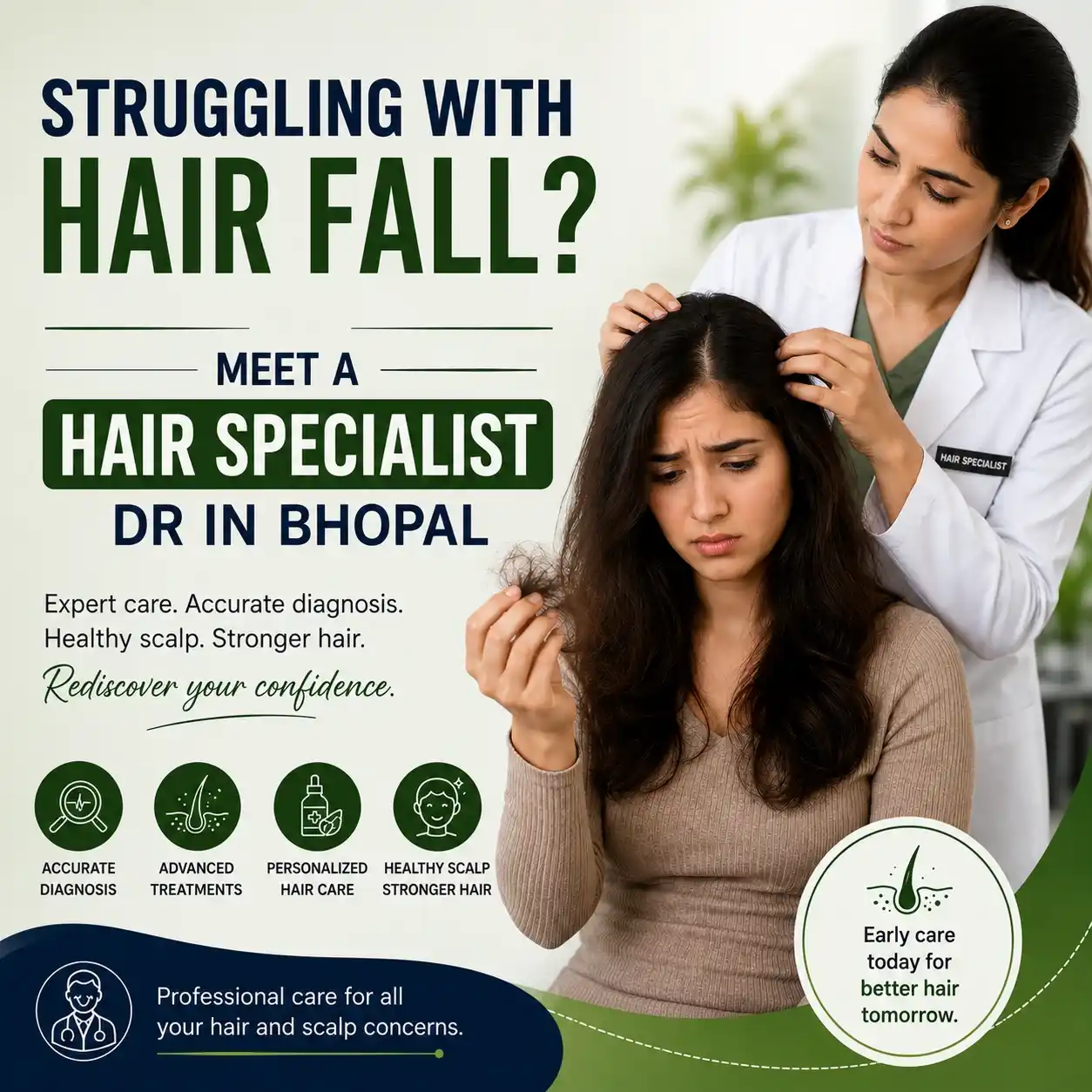
People of all ages can be affected by hair loss, which is a widespread issue. Losing a few strands each day is normal, but excessive shedding, visible thinning, a widening part, or bald patches may indicate an underlying hair or scalp issue. If hair fall continues despite trying different shampoos, oils, supplements, or home remedies, consulting a qualified hair specialist doctor in Bhopal can help you understand the cause and choose appropriate treatment.
A hair specialist evaluates your hair and scalp, looks for patterns of hair loss, considers your medical and lifestyle history, and recommends a treatment plan based on your individual condition. Early professional guidance can also help prevent certain types of hair loss from progressing.
Understanding Why Hair Fall Happens
Hair loss does not have one single cause. Several factors can affect the hair growth cycle, and identifying the underlying reason is essential for effective management.
Common causes of hair fall include:
- Hereditary or genetic hair loss
- Nutritional deficiencies
- Hormonal changes
- Stress and poor sleep
- Thyroid-related conditions
- Certain medications
- Scalp infections or inflammation
- Dandruff and other scalp disorders
- Excessive hairstyling or chemical treatments
- Sudden weight loss
- Certain autoimmune conditions
Sometimes, more than one factor may contribute to hair loss. For example, a person may have genetic hair thinning along with nutritional deficiencies or scalp inflammation. This is why professional assessment can be more useful than relying only on general hair-care advice.
When Should You Consult a Hair Specialist?
Not every episode of hair shedding requires medical treatment. However, certain signs should encourage you to seek professional evaluation.
Consider consulting a hair specialist in Bhopal if you notice:
- Hair fall that continues for several weeks or months
- Noticeable thinning around the crown or hairline
- A widening hair part
- Receding hairline
- Bald patches
- Increased hair breakage
- Persistent dandruff or scalp irritation
- Itching, redness, or scaling of the scalp
- Sudden excessive shedding
- Reduced hair density
- Hair loss accompanied by other unexplained symptoms
Early evaluation may help determine whether the problem is temporary shedding, progressive hair loss, or a scalp condition requiring specific treatment.
What Happens During a Hair Consultation?
A professional hair consultation generally begins with a detailed discussion about your concerns. The doctor may ask when the hair fall started, whether it is sudden or gradual, your family history, recent illnesses, diet, stress levels, medications, and previous treatments.
The scalp and hair may then be examined to assess:
- Hair density
- Hair shaft condition
- Scalp health
- Pattern of hair loss
- Signs of inflammation or infection
- Hair breakage
- New hair growth
Depending on your symptoms and clinical findings, the doctor may recommend additional investigations. These could help identify nutritional, hormonal, or other contributing factors.
The goal is not simply to reduce visible hair shedding but to understand why the hair is falling and address the underlying issue wherever possible.
Common Types of Hair Loss
Knowing the type of hair loss might assist clarify the importance of a professional diagnosis.
Male Pattern Hair Loss
Male pattern hair loss is a common genetic condition that typically affects the hairline and crown. It can gradually progress over time.
Female Pattern Hair Loss
Women may experience gradual thinning, particularly around the central part of the scalp. Hormonal and genetic factors can contribute to this condition.
Diffuse Hair Loss
Diffuse hair loss involves increased shedding or thinning across a larger area of the scalp rather than a specific bald patch. Stress, illness, nutritional issues, hormonal changes, and other factors can contribute.
Alopecia Areata
Alopecia areata can cause clearly defined patches of hair loss. Because it may involve an autoimmune process, proper evaluation is important.
Scalp-Related Hair Loss
Conditions such as dandruff, scalp psoriasis, dermatitis, or infections can affect scalp health and potentially contribute to hair shedding or breakage.
Treatment Depends on the Cause
No single treatment works for every type of hair loss. A hair specialist doctor in Bhopal may recommend a customized approach based on your diagnosis, age, gender, hair-loss pattern, scalp condition, and overall health.
Treatment options may include medical therapy, scalp care, dietary adjustments, lifestyle changes, or hair growth and density-promoting procedures, depending on the underlying cause.
Some patients may need to treat an underlying medical or scalp condition first. Others with progressive genetic hair loss may benefit from long-term hair-growth management.
The key point is that treatment should be based on a proper diagnosis, not on choosing products based on advertisements or online trends.
Why Personalized Hair Care Matters
Your hair type, scalp condition, lifestyle, genetics, and health history are different from someone else’s. A routine that works for one person may not suit another.
A personalized approach can help identify:
- The likely cause of hair fall
- The condition of your scalp
- Factors contributing to thinning
- Suitable treatment options
- Appropriate hair-care practices
- Whether further evaluation is required
This can make your hair-care journey more focused and realistic.
Lifestyle Habits That Support Hair Health
Healthy daily habits can complement professional treatment.Treatment options may include medical therapy, scalp care, dietary adjustments, lifestyle changes, or hair growth and density-promoting procedures, depending on the underlying cause.
You can also support overall hair health by:
- Eating a balanced diet
- Staying adequately hydrated
- Managing stress
- Getting sufficient sleep
- Avoiding excessive heat styling
- Limiting unnecessary chemical treatments
- Avoiding very tight hairstyles
- Keeping the scalp clean
- Treating persistent dandruff or scalp irritation
- Avoiding unnecessary supplements without professional advice
Remember that lifestyle improvements can support healthy hair, but they may not be enough to treat every type of hair loss.
Avoid Self-Treating Persistent Hair Loss
Hair fall products, oils, supplements, and home remedies are widely promoted online. However, using multiple products without knowing the cause of your hair loss can delay appropriate treatment.
For example, hair shedding caused by a medical condition may require a completely different approach from genetic hair thinning. Similarly, scalp inflammation may need specific management rather than simply using cosmetic hair products.
If your hair fall is persistent or worsening, professional evaluation is a more sensible starting point.
Choosing the Right Hair Specialist Dr in Bhopal
When looking for a Hair Specialist Dr in Bhopal, consider the doctor’s experience in diagnosing and managing different hair and scalp conditions. A good consultation should assess your individual concerns rather than offer a one-size-fits-all recommendation.
Look for a professional who:
- Evaluates the scalp and hair carefully
- Discusses possible causes of hair loss
- Explains treatment options clearly
- Sets realistic expectations
- Recommends appropriate investigations when needed
- Provides personalized follow-up
The right professional guidance can help you make informed decisions about your hair health.
Take the First Step Toward Better Hair Health
Hair fall can be frustrating, especially when it begins affecting your confidence. But persistent hair loss shouldn’t be something you have to live with. Understanding the cause is the first step toward managing the problem effectively.
If you are experiencing ongoing shedding, thinning, bald patches, or scalp problems, consulting a hair specialist doctor in Bhopal can help you understand your condition and explore suitable treatment options.
With timely evaluation, personalized care, and consistent follow-up, you can take a more informed approach to maintaining healthier hair and scalp.
FAQ
1. When should I see a Hair Specialist Dr in Bhopal for hair fall?
Consider a consultation if hair fall is persistent, increasing, causing visible thinning, creating bald patches, or occurring with scalp symptoms such as itching, redness, or scaling.
2. What causes excessive hair fall?
Excessive hair fall can result from genetics, hormonal changes, nutritional deficiencies, stress, illness, medications, scalp conditions, or other factors. A professional evaluation can help identify the likely cause.
3. Can hair fall be treated permanently?
The outcome depends on the underlying cause. Some temporary hair shedding can improve once you address the trigger, while genetic hair loss may require ongoing management.
4. Can dandruff cause hair fall?
Persistent scalp inflammation and scratching associated with dandruff can contribute to increased shedding or hair breakage. Treating the underlying scalp problem may help improve scalp and hair health.
5. How can I find the right Hair Specialist Dr in Bhopal?
Look for a qualified professional experienced in diagnosing hair and scalp conditions. During the consultation, discuss your hair-loss history, concerns, previous treatments, and expectations so the doctor can develop an appropriate plan.