




One of the most prevalent skin issues that affects both adults and teenagers is acne. While pimples and breakouts can happen to any skin type, people with oily and sensitive skin often face greater challenges in managing acne. Excess oil production can clog pores, while sensitive skin may react negatively to harsh skincare products and treatments.
Finding the right Acne Treatment for oily and sensitive skin requires balance. The goal is to reduce oil, prevent breakouts, and calm irritation without damaging the skin barrier. In this blog, we will explore the best acne treatment tips, skincare routines, and professional solutions for achieving healthier and clearer skin.
Understanding Acne in Oily and Sensitive Skin
When oil, dead skin cells, and germs clog hair follicles, acne results. Oily skin naturally produces more sebum, increasing the chances of blocked pores and breakouts. At the same time, sensitive skin is more prone to redness, inflammation, dryness, and irritation.
This combination makes acne management more difficult because strong acne products may worsen sensitivity, while mild products may not effectively control excess oil.
Common Causes of Acne
Acne outbreaks in oily and sensitive skin are caused by a number of factors:
- Excess oil production
- Hormonal changes
- Stress and lack of sleep
- Improper skincare products
- Poor diet and dehydration
- Bacterial buildup
- Pollution and sweat
- Touching or picking at pimples
Selecting the best acne treatment strategy requires an understanding of the underlying causes of acne.
Best Acne Treatment Tips for Oily and Sensitive Skin
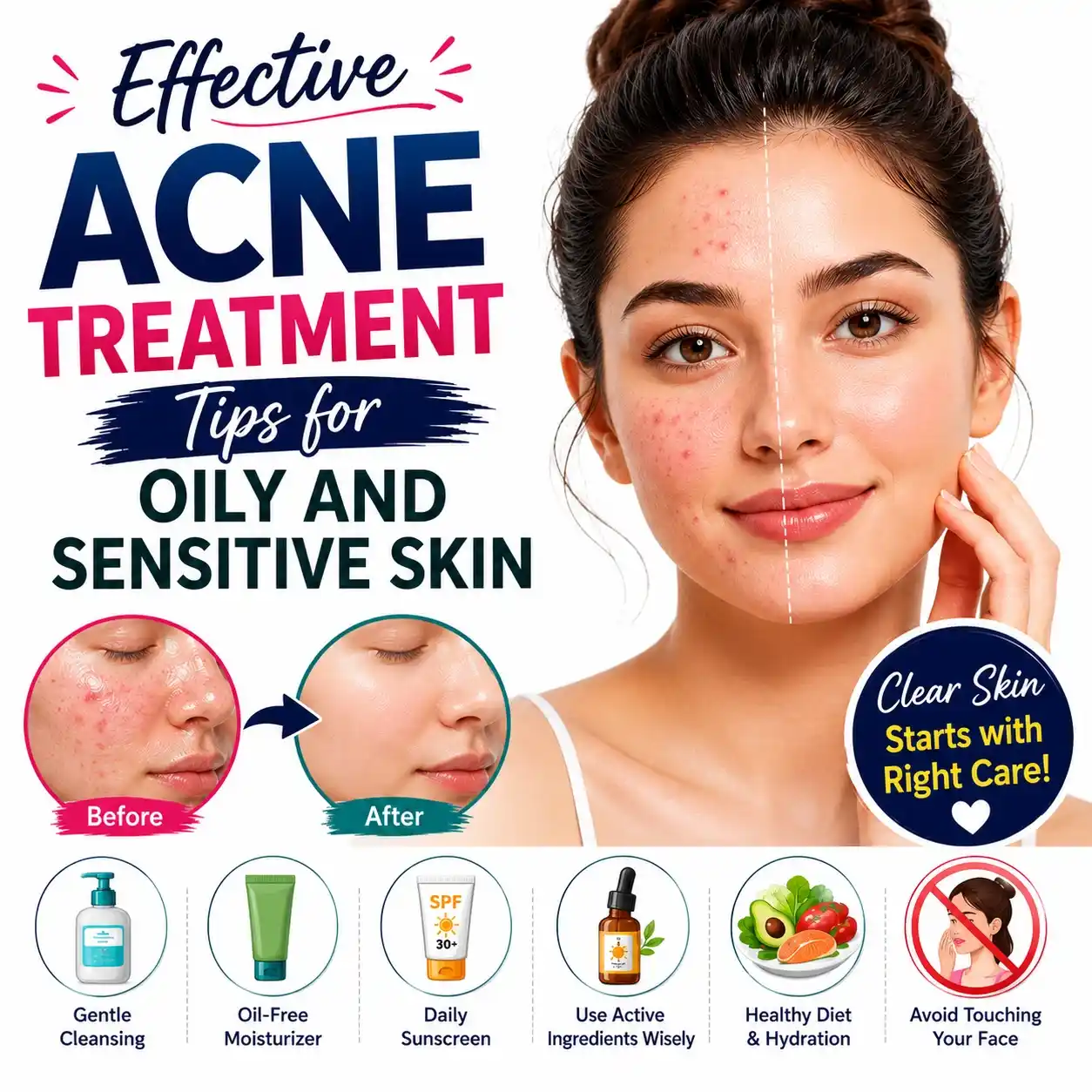
1. Use a Gentle Cleanser
Cleansing is the first step in every acne treatment routine. Avoid using harsh face washes that contain alcohol or powerful chemicals if you have sensitive or oily skin.
Choose a gentle, sulfate-free cleanser that removes excess oil and dirt without stripping the skin’s natural moisture. Washing your face twice daily is usually enough.
Over-cleansing can irritate sensitive skin and trigger more oil production.
2. Avoid Heavy Skincare Products
Heavy creams and oil-based products can clog pores and worsen acne. Look for products labeled:
- Non-comedogenic
- Oil-free
- Fragrance-free
- Dermatologist-tested
Lightweight gel-based moisturizers are often ideal for oily and sensitive skin.
3. Moisturizing Is Important
Many people with oily skin skip moisturizer because they think it causes more breakouts. However, dehydrated skin may produce even more oil to compensate for dryness.
Using a lightweight moisturizer helps maintain the skin barrier and supports effective Acne Treatment results.
4. Use Salicylic Acid Carefully
One of the best substances for skin prone to acne is salicylic acid. It aids in pimple prevention, oil accumulation reduction, and pore unclogging.
However, sensitive skin may react to high concentrations. Start with low-strength products and use them only a few times a week initially.
5. Do Not Over-Exfoliate
Exfoliation helps remove dead skin cells, but over-exfoliating can damage sensitive skin and increase redness and irritation.
Use mild exfoliants once or twice weekly instead of harsh scrubs.
6. Apply Sunscreen Daily
Sun exposure can worsen acne marks and irritate sensitive skin. Always use a lightweight, non-greasy sunscreen with SPF 30 or higher.
For oily skin, gel-based or matte-finish sunscreens are effective.
7. Avoid Touching Your Face
Touching your face transfers dirt and bacteria to the skin, increasing the risk of acne breakouts. Picking or squeezing pimples can also cause scarring and inflammation.
A proper Acne Treatment routine should include keeping hands away from the face as much as possible.
8. Follow a Healthy Diet
Your diet can influence skin health. Foods high in sugar, processed oils, and dairy may trigger breakouts in some individuals.
For healthier skin, include:
- Fresh fruits and vegetables
- Protein-rich foods
- Omega-3 fatty acids
- Plenty of water
Good nutrition supports long-term acne treatment and overall skin health.
Professional Acne Treatment Options
When home care and skincare products are not enough, professional treatments may help manage persistent acne more effectively.
1. Chemical Peels
Chemical peels help remove dead skin cells, unclog pores, and improve acne marks. Mild peels designed for sensitive skin can offer visible improvements without excessive irritation.
2. Laser Acne Treatment
Laser therapy targets acne-causing bacteria and reduces inflammation. It also helps control oil production and improve skin texture.
Laser Acne Treatment is especially useful for stubborn acne and acne scars.
3. Hydrafacial for Acne-Prone Skin
Hydrafacial treatments deeply cleanse the skin, remove impurities, and hydrate the skin barrier. Specialized acne-focused Hydrafacial treatments can help oily and sensitive skin feel refreshed and balanced.
4. Prescription Medications
Dermatologists may recommend prescription creams, antibiotics, or oral medications for moderate to severe acne cases.
These treatments should always be used under medical supervision.
Best Skincare Routine for Oily and Sensitive Skin
Here is a simple daily skincare routine for acne-prone oily and sensitive skin:
Morning Routine
- Gentle cleanser
- Lightweight toner (optional)
- Oil-free moisturizer
- Sunscreen SPF 30+
Night Routine
- Gentle cleanser
- Acne treatment serum or spot treatment
- Lightweight moisturizer
Consistency is essential in any Acne Treatment plan. Results often take several weeks to become noticeable.
Mistakes to Avoid During Acne Treatment
Many people unknowingly worsen acne by following incorrect skincare habits.
Avoid these common mistakes:
- Using too many products at once
- Sleeping with makeup on
- Skipping sunscreen
- Popping pimples
- Using harsh scrubs
- Frequently changing skincare products
Simple and consistent skincare usually works better than aggressive treatments.
How Long Does Acne Treatment Take?
Acne treatment results vary depending on the severity of acne and skin type. Mild acne may improve within a few weeks, while moderate or severe acne may require several months of consistent care.
Patience is important because skin healing takes time.
When Should You Visit a Dermatologist?
You should consult a dermatologist if:
- Acne becomes painful or cystic
- Breakouts leave scars
- Over-the-counter products do not help
- Skin irritation becomes severe
- Acne affects confidence or mental well-being
Professional guidance can help you find the safest and most effective Acne Treatment for your skin type.
Final Thoughts
Managing acne in oily and sensitive skin requires a careful and balanced approach. Using gentle skincare products, maintaining hydration, protecting the skin barrier, and following a healthy lifestyle can significantly improve acne over time.
Professional treatments such as chemical peels, laser therapy, and Hydrafacial procedures can also support better results when combined with a proper skincare routine.
Remember that every skin type is different, and the best Acne Treatment is one that suits your skin’s unique needs. With consistency and the right care, healthier and clearer skin is possible.
FAQs
1. What is the best Acne Treatment for oily skin?
The best acne treatment for oily skin usually includes gentle cleansers, salicylic acid products, lightweight moisturizers, and professional treatments if needed.
2. Can sensitive skin use acne treatment products?
Yes, sensitive skin can use acne treatment products, but mild and dermatologist-approved formulations are recommended to avoid irritation.
3. How long does Acne Treatment take to show results?
Most acne treatments take around 4 to 8 weeks to show visible improvement, depending on the severity of acne.
4. Is laser Acne Treatment safe for sensitive skin?
Laser acne treatment can be safe for sensitive skin when performed by an experienced dermatologist using suitable settings.
5. Can diet affect Acne Treatment results?
Yes, maintaining a healthy diet and staying hydrated may support better acne treatment outcomes and improve overall skin health.