





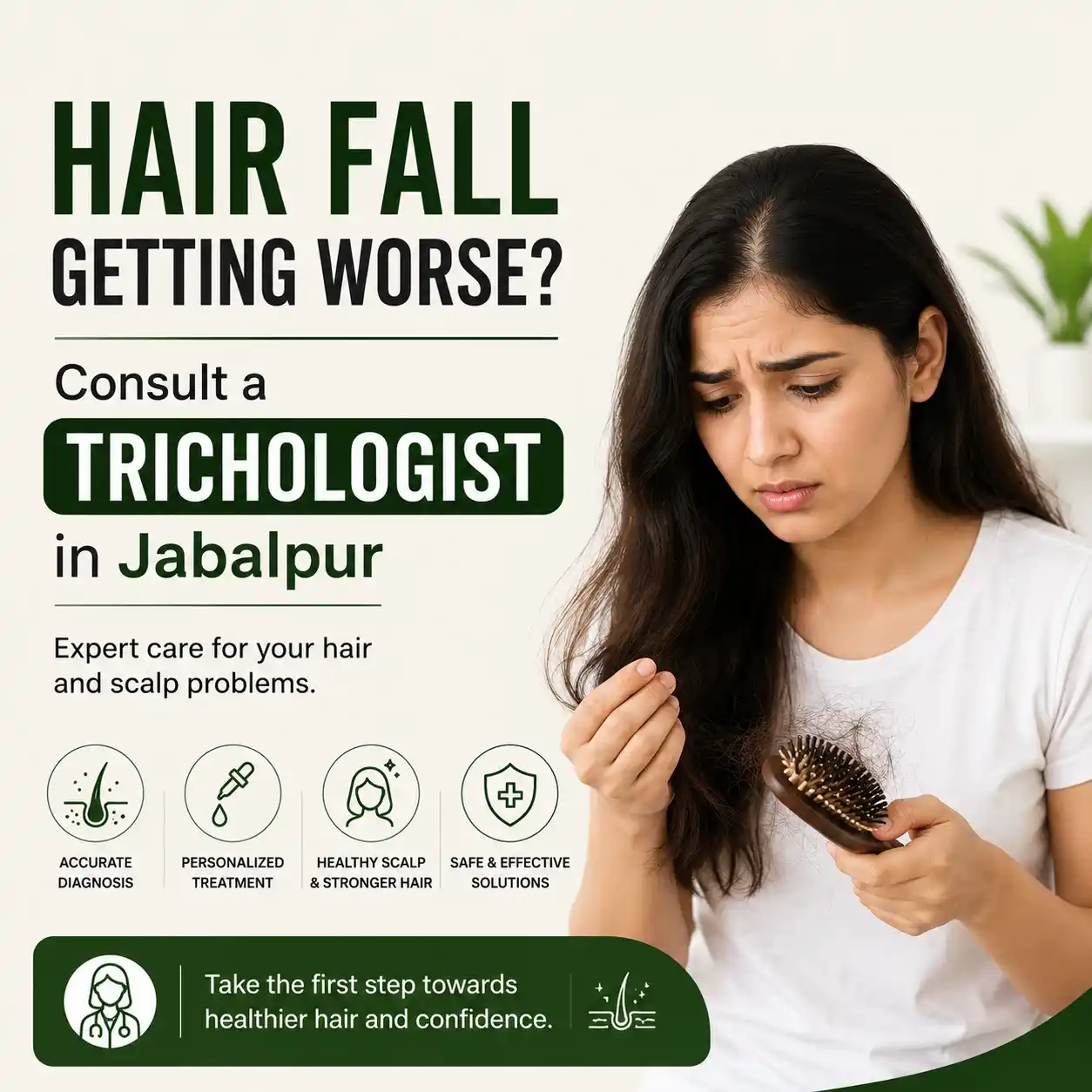
Hair fall is a common concern, but when shedding becomes excessive or continues for weeks and months, it should not be ignored. Finding hair strands on your pillow or comb can be normal, but noticeable thinning, widening hair gaps, receding hairlines, or bald patches may indicate an underlying hair or scalp condition.
If your hair fall is getting worse despite trying shampoos, oils, home remedies, or supplements, consulting a Trichologist in Jabalpur can help you understand what is actually causing the problem. A trichologist focuses on hair and scalp health and can assess your symptoms, identify contributing factors, and recommend an appropriate approach based on your individual needs.
When Does Hair Fall Become a Concern?
Everyone naturally sheds hair as part of the normal hair-growth cycle. However, excessive or persistent shedding may require professional attention.
You should consider consulting a Trichologist in Jabalpur if you notice:
- Increasing hair fall while washing or combing
- Visible thinning of the scalp
- A widening hair part
- Receding hairline
- Reduced hair density
- Sudden bald patches
- Excessive hair breakage
- Persistent dandruff
- Scalp itching or redness
- Slow or poor hair growth
The earlier the cause is identified, the sooner an appropriate treatment strategy can be considered.
What Causes Hair Fall?
Hair loss can have multiple causes, and sometimes several factors may occur together. Common causes include genetics, nutritional deficiencies, stress, hormonal changes, illness, medications, and scalp disorders.
Genetic Hair Loss
Pattern hair loss is one of the most common causes of progressive thinning. It can affect both men and women and may gradually become more noticeable with age.
Stress and Lifestyle
Significant physical or emotional stress can temporarily disrupt the hair-growth cycle. Poor sleep, crash dieting, and major lifestyle changes may also contribute to increased shedding.
Nutritional Deficiencies
Hair growth requires adequate nutrition. Low levels of certain nutrients, including iron, vitamin D, zinc, or inadequate protein intake, may be associated with hair concerns in some individuals.
Hormonal Changes
Hormonal fluctuations can influence hair growth. Thyroid-related problems, pregnancy, menopause, and certain hormonal conditions may contribute to increased shedding or thinning.
Scalp Conditions
Dandruff, seborrheic dermatitis, scalp psoriasis, infections, and other inflammatory conditions can affect scalp health and may contribute to hair shedding or breakage.
Autoimmune Conditions
Some conditions, such as alopecia areata, can cause sudden, clearly defined patches of hair loss and require professional evaluation.
Why Consult a Trichologist?
One of the biggest advantages of consulting a Trichologist in Jabalpur is that the focus is not simply on reducing visible hair fall. The aim is to understand the underlying cause.
During a consultation, the specialist may consider:
- Your pattern of hair loss
- Family history
- Diet and lifestyle
- Recent illness or stress
- Medications
- Scalp condition
- Hair-care practices
- Duration and severity of hair loss
This information can help create a more personalized approach instead of relying on generic hair-care products.
What Happens During a Hair and Scalp Consultation?
A consultation generally begins with a detailed discussion about your hair concerns. The specialist may ask when your hair fall started, whether it is sudden or gradual, and whether anyone in your family has experienced similar problems.
The scalp and hair may then be examined to assess density, hair thickness, scalp condition, and the pattern of hair loss.
Depending on your symptoms, additional investigations may sometimes be recommended. These could include blood tests or specialized scalp and hair assessments.
The purpose of evaluation is to determine whether your hair loss is related to genetics, temporary shedding, nutritional concerns, scalp disease, hormonal factors, or another underlying issue.
Common Hair Problems a Trichologist Can Evaluate
A Trichologist in Jabalpur may evaluate several types of hair and scalp concerns, including:
Male Pattern Hair Loss
This commonly causes gradual thinning around the temples, hairline, or crown.
Female Pattern Hair Loss
Women may experience gradual reduction in hair density, particularly around the central scalp or parting.
Alopecia Areata
This condition can cause sudden, round or oval patches of hair loss and may require timely medical assessment.
Telogen Effluvium
This type of shedding can occur after significant stress, illness, surgery, nutritional changes, or other triggers.
Scalp Psoriasis
Scalp psoriasis may cause scaling, redness, itching, and discomfort. Managing the scalp condition is important for overall scalp health.
Dandruff and Seborrheic Dermatitis
Persistent flaking, itching, and inflammation should be assessed if regular anti-dandruff products are not providing adequate relief.
Treatment Depends on the Cause
There is no single treatment that works for every type of hair loss. A professional may recommend different options depending on the diagnosis.
Potential approaches can include:
- Medical hair-loss treatments
- Scalp-specific therapies
- Nutritional correction when a deficiency is identified
- PRP therapy for suitable candidates
- Low-level light or laser-based treatments in appropriate cases
- Management of scalp disorders
- Hair restoration procedures for selected patients
The suitability of any treatment depends on factors such as the cause of hair loss, severity, medical history, age, and individual expectations.
Why You Should Avoid Random Hair Treatments
The internet is filled with hair oils, supplements, shampoos, serums, and quick-fix treatments claiming to stop hair loss. While some products may support general hair care, they cannot necessarily treat an underlying medical or scalp condition.
Taking supplements without identifying a deficiency may also be unnecessary. Similarly, repeatedly changing products can delay proper diagnosis.
If your hair fall is getting worse, professional evaluation can help you move from guesswork toward a more structured approach.
Everyday Tips to Support Hair Health
Along with professional care, healthy daily habits can support your hair and scalp.
Maintain a Balanced Diet
Include adequate protein along with fruits, vegetables, whole grains, nuts, seeds, and other nutrient-rich foods.
Be Gentle With Your Hair
Avoid excessive brushing, aggressive towel drying, and hairstyles that continuously pull on the hair.
Limit Heat and Chemical Damage
Frequent straightening, curling, bleaching, and other chemical procedures can increase hair breakage.
Keep Your Scalp Clean
Use a suitable cleansing routine based on your scalp type. Persistent dandruff or irritation should be professionally evaluated.
Manage Stress
Regular physical activity, adequate sleep, relaxation techniques, and a balanced routine may help support overall well-being.
Choosing a Trichologist in Jabalpur
When searching for a Trichologist in Jabalpur, look for a qualified professional with experience in diagnosing different hair and scalp concerns.
Consider whether the specialist:
- Performs a detailed consultation
- Examines the scalp and hair carefully
- Explains possible causes
- Recommends treatment based on diagnosis
- Sets realistic expectations
- Provides follow-up guidance
A personalized approach is generally more useful than a one-size-fits-all hair treatment.
Don’t Wait Until Hair Loss Becomes More Noticeable
Hair fall can be easier to manage when the underlying cause is identified early. Waiting until significant thinning or extensive hair loss develops may limit some treatment options.
If you are noticing increasing hair shedding, thinning, bald patches, or scalp problems, consulting a Trichologist in Jabalpur can be a useful first step.
Professional guidance can help you understand your hair condition, avoid unsuitable treatments, and develop a practical plan focused on healthier hair and scalp.
Final Thoughts
Increasing hair fall can be frustrating, but it does not always mean permanent hair loss. The causes can range from temporary shedding and lifestyle factors to genetic hair loss and scalp disorders.
If your hair fall is getting worse, don’t rely solely on home remedies or cosmetic products. A consultation with a Trichologist in Jabalpur can help identify the underlying cause and determine whether professional treatment is appropriate.
With timely evaluation, personalized care, and consistent attention to scalp health, you can take a more informed approach to managing hair fall and supporting healthier-looking hair.
FAQs
1. When should I consult a Trichologist in Jabalpur?
You should consider consulting a Trichologist in Jabalpur if hair fall becomes excessive, continues for several weeks or months, causes visible thinning, or occurs with bald patches, dandruff, itching, or scalp irritation.
2. What are the most common causes of hair fall?
Common causes include genetic hair loss, stress, nutritional deficiencies, hormonal changes, illness, certain medications, and scalp conditions. A professional evaluation can help determine the likely cause.
3. Can a trichologist treat both hair loss and scalp problems?
Yes. A trichologist can evaluate various hair and scalp concerns, including hair thinning, excessive shedding, dandruff, scalp irritation, pattern hair loss, and certain scalp disorders.
4. Is PRP treatment suitable for everyone with hair loss?
No. PRP may be suitable for certain types of hair loss, but its effectiveness and suitability depend on the individual’s diagnosis, stage of hair loss, and overall health. A professional consultation is recommended before treatment.
5. Can hair fall be completely prevented?
Not all types of hair loss can be completely prevented. However, identifying the cause early and following an appropriate treatment and hair-care plan may help manage hair loss and protect existing hair.